
A waterfront property can offer beautiful views and a peaceful setting for a future home, but the distance between the shoreline and your preferred building location deserves careful consideration. Even when a lot extends directly to the water, local regulations may limit how close you can place a house.
For buyers planning a future residence, knowing what shoreline setbacks are for waterfront homes clarifies where construction can occur and how much land remains available for outdoor living. Understanding these restrictions before purchasing can help you choose a property that accommodates your plans.
Understand How Shoreline Setbacks Work
A shoreline setback establishes a minimum distance between a designated shoreline boundary and certain types of construction. Local authorities may use these requirements to protect water quality and limit development near lakes or rivers.
The required distance depends on the property’s location and the regulations governing the waterbody. Some jurisdictions establish different requirements for residential structures and improvements near the water, so one setback may not apply to everything you plan to build.
A setback does not necessarily prevent homeowners from using the land between the house and shoreline. However, it may restrict construction or certain activities within that area.
Learn Where Shoreline Setbacks Begin
Although the water’s edge may seem like the obvious starting point for measuring a setback, the visible shoreline does not always establish the regulatory boundary. Water levels can change throughout the year, making this distinction important for waterfront properties.
Depending on local regulations, authorities may measure setbacks from an ordinary high-water mark or another designated shoreline boundary. The measurement method determines where the restricted area begins.
A property survey and applicable regulatory maps can help establish relevant boundaries. Before relying on a building plan, confirm the measurement method with the appropriate permitting authority.
See How Setbacks Affect Your Building Location
Even a spacious waterfront lot may offer fewer building options than its acreage suggests. Shoreline setbacks establish one boundary of the available building area, while other restrictions may further influence where a home can fit.
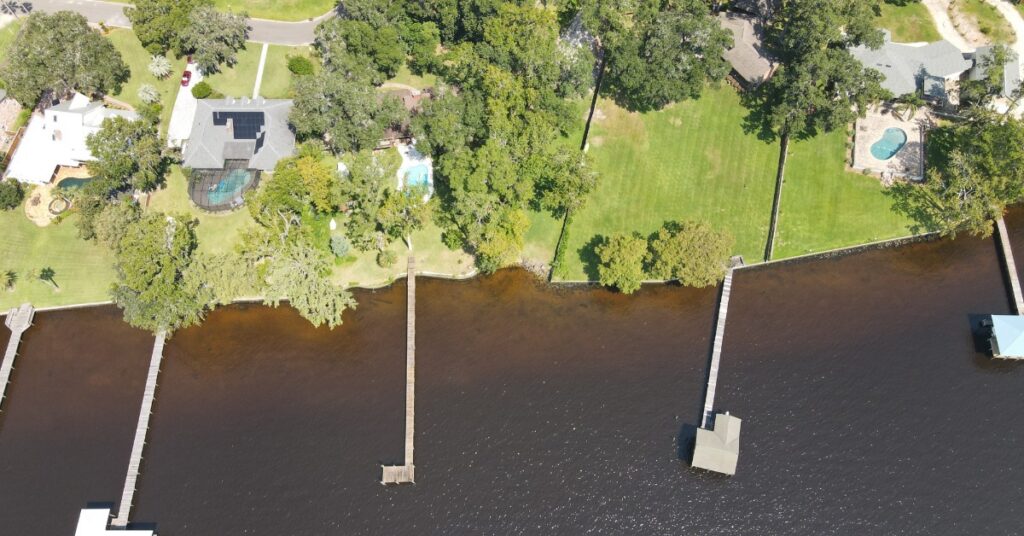
Imagine finding a wooded lakefront parcel with a gently sloping clearing overlooking the water. Although the clearing might seem ideal for a house, the shoreline setback could require you to move the structure farther inland. That adjustment may also influence driveway access or the home’s orientation.
Side-yard setbacks and existing easements can further narrow the available building envelope. A qualified surveyor or design professional can help you evaluate these restrictions together before committing to a design.
Consider How Setbacks Influence Waterfront Views
For buyers drawn to waterfront living, the view from the future home can be just as important as shoreline access. A setback may place the house farther from the water than expected, changing the perspective from its windows or outdoor gathering areas.
On an open lot, the additional distance may have little effect on the scenery. A heavily wooded property or one with significant elevation changes could offer a different experience. When touring potential homesites, evaluate the view from the likely building location.
Even when a home complies with the setback, local rules might restrict tree removal near the water. Buyers hoping for broader sightlines should investigate those limitations before assuming they can modify the landscape.
Understand Restrictions on Shoreline Improvements
The main residence is not always the only structure subject to shoreline regulations. Depending on the jurisdiction, restrictions may also apply to patios, retaining walls, or other improvements near the water.
A buyer might envision a lakeside seating area with a walkway leading toward the shoreline. Although the property offers enough physical space, local regulations could limit where those improvements can go or require additional approvals.
Docks and shoreline access structures may follow separate rules from residential building setbacks. On managed lakes or reservoirs, additional authorities may oversee construction near the water. Waterfront ownership does not automatically establish permission to build a dock.
Find Out Whether Setback Exceptions Are Available
Some jurisdictions allow property owners to request a variance when standard setback requirements create development difficulties. However, the availability of an exception does not guarantee approval.
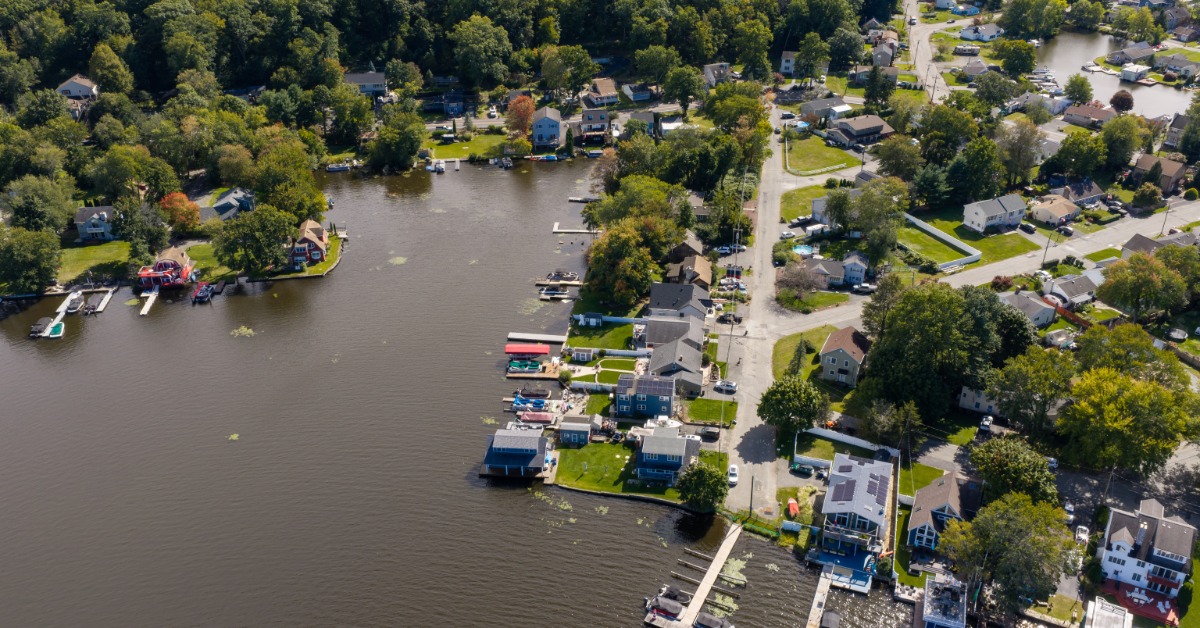
A narrow waterfront lot might have limited building space after applying the required setbacks. Depending on local regulations, the owner may have an opportunity to request relief based on the property’s circumstances.
Before purchasing land that depends on an exception, investigate the applicable criteria and approval process. Buyers should distinguish between what the property currently allows and what they hope to obtain through a future application.
Review Setback Requirements Before Buying Waterfront Land
Shoreline setbacks deserve attention during property evaluation, particularly when you intend to build a custom home. Investigating the requirements early can help you determine whether the lot accommodates your preferred design.
As you evaluate a potential purchase, consider these questions:
- Which authority establishes the shoreline setback?
- Where does the jurisdiction measure the setback from?
- How much land remains available for the proposed home?
- Do separate restrictions apply to shoreline improvements?
- Does the property have existing permits or approved exceptions?
If the seller has a recent survey or approved site plan, request copies for review. The local planning office can clarify applicable regulations, while a surveyor can help identify relevant boundaries.
Where uncertainty remains, consider whether the purchase agreement provides enough time to investigate the property’s development potential. Resolving these questions during due diligence can help you avoid relying on impractical building assumptions.
Compare Waterfront Properties Beyond Their Shoreline Access
Two waterfront parcels may offer similar shoreline frontage while presenting different construction opportunities. A property with a clearly established building area could provide greater planning certainty than one where the proposed home depends on an unapproved exception.
Consider how the permitted building location relates to the experience you want. One lot might accommodate a home with expansive water views, while another offers more privacy or room for outdoor gatherings. These differences can matter more to your plans than shoreline frontage alone.
For those looking to buy and sell waterfront property, understanding how land use restrictions affect development potential can provide valuable perspective. Buyers can evaluate possible homesites more carefully, while sellers can better understand the property characteristics that may influence purchasing decisions.
Build With a Clear Understanding of Shoreline Setbacks
When considering what shoreline setbacks are for waterfront homes, the most important takeaway is how these requirements influence the way you can use your property. Confirming the applicable restrictions before purchasing can help you select a homesite that supports your vision for waterfront living.
At Waterfront Group, we offer distinctive waterfront and mountain properties for buyers seeking a place to build a future retreat or residence. Explore our available properties and communities and contact us to discuss the setting you envision for your waterfront home.